

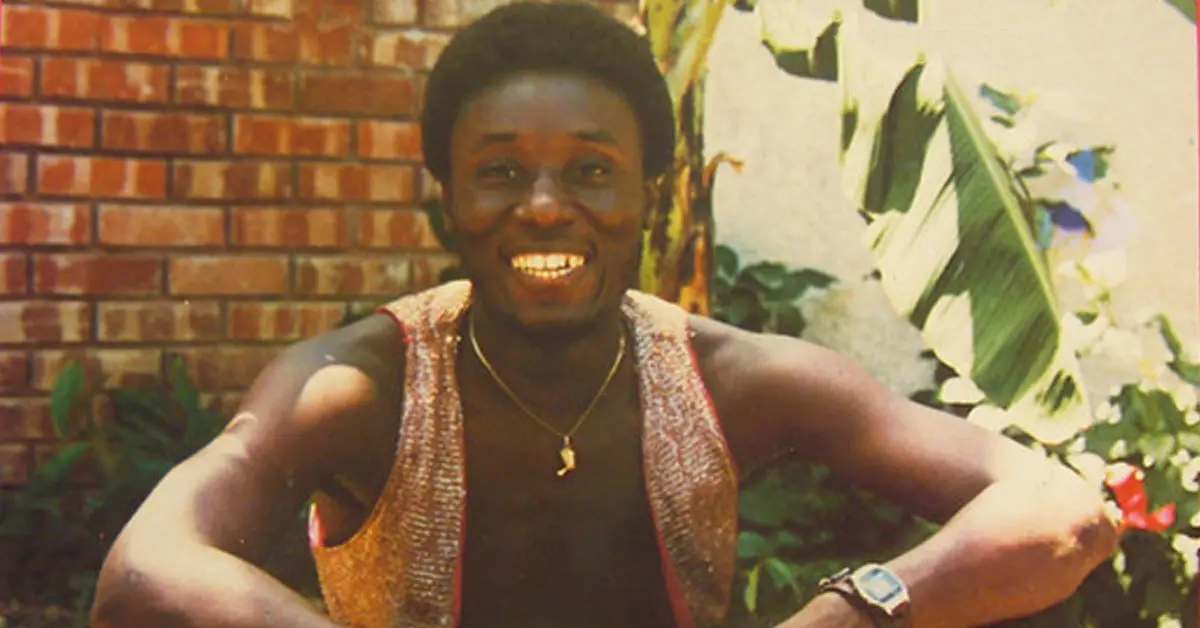
Ti Manno, whose real name was Emmanuel Jean Baptiste, is remembered as one of the most iconic figures in Haitian music. More than two decades after his passing, his name continues to resonate with reverence among fans of compas music and scholars alike. Ti Manno is celebrated as a visionary and patriotic artist, known for his exceptional talent and charisma.
Throughout his illustrious career, Ti Manno lent his distinctive voice to various groups, including Volo-Volo, Astros from New York, and D.P. Express, before founding his own group, Gemini All Stars. In Gemini All Stars, he showcased his full range of genius, creating songs that explored a wide array of deeply human themes, such as love, justice, freedom, alienation, exclusion, and hope.
Ti Manno was an ardent advocate for social justice, distinguishing himself from the more superficial musical styles of his time. His work was marked by an unwavering commitment to justice and freedom. His songs like “Lajan,” “Exploitation,” “Asamm,” “Nèg kont nèg,” “Sort of the Third World,” “Maryaj interè,” and “Korije…” critiqued the sociopolitical and cultural issues plaguing society, particularly during the challenging era of the Duvalier dictatorship. His lyrics called for a change in mentality and a better Haiti.
In the song “Exploitation,” Ti Manno decried the exploitation of people and urged the end of inequalities within Haitian society, advocating for unity and fairness: “Equality, brotherhood, let us observe / for the city to be one with the countryside.” He also addressed the issue of sexual harassment, particularly in the workplace, highlighting the struggles women faced: “There is a series of bosses, they are not looking for knowledge, they are looking for someone to satisfy their feelings / they ask them to do overtime, overtime turns into overall… Look at the misery women are going through to work, oh God!”
Ti Manno also passionately protested the mistreatment of Haitian immigrants in countries such as the United States, Colombia, Peru, Venezuela, the Bahamas, and Bolivia. In “Danger,” he spoke out against the harsh realities faced by these immigrants, denouncing the discrimination and humiliation they suffered due to Haiti’s economic struggles: “They took the misery of our country for two days / everywhere we went they kicked us with booties / it was really bad for me to see white Haitians in the immigration service would make dogs eat them.”
Driven by patriotism and a deep sense of humanity, Ti Manno composed “SIDA” to defend Haitians against the stigma of being labeled as carriers of AIDS, in a spirit of Haitianphobia. This theme was also echoed in Ansy Dérose’s song “FDA wanraje,” which mobilized thousands of Haitians to protest in Brooklyn on April 20, 1990, against discriminatory actions by the Food and Drug Administration.
Ti Manno’s love for his homeland is evident in his song “David,” which was written during a time when Haiti was threatened by the devastating hurricane David. In his song “Lajan,” he offered guidance to young Haitians, urging them to focus on education and hard work rather than seeking easy success: “Ti jèn jan kap etidye / Fók nou pa dekouraje se sèvo nou ki paspó nou lajan se supèfli…” (“Young people studying / We must not be discouraged, our brains are our passport, money is secondary…”).
Ti Manno’s legacy endures as a powerful voice advocating for justice, equality, and the upliftment of his fellow Haitians. His music remains a source of inspiration and reflection for many.
