

Heart attacks are responsible for 25% of all deaths in America. This makes heart attacks the leading cause of death in the country, even outranking cancer. The major causes of a heart attack are high blood pressure, high cholesterol, and smoking. According to the Centers for Disease Control and Prevention, the following conditions will add to your risk of having a heart attack:
DiabetesOverweight and obesityPoor dietPhysical inactivityExcessive alcohol use
Approximately half of all heart attacks happen outside of a hospital and early detection is a key factor in determining your chance of survival. According to the CDC: “In a 2005 survey, most respondents—92%—
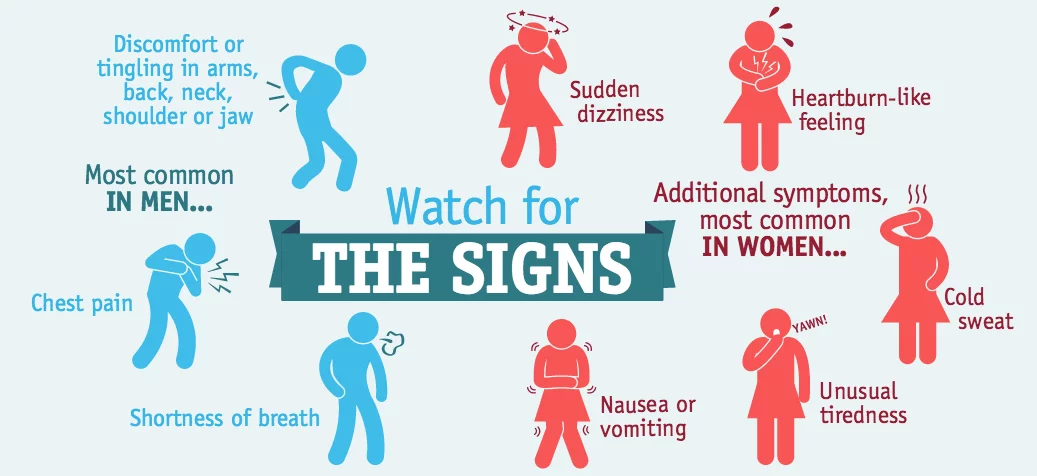
Here are the major symptoms to be aware of:
1. Chest Discomfort
This is the most common of all symptoms and it can strike in a variety of ways. Some people feel pressure in their chest and others feel burning or pinching. The feeling can happen when you’re involved in physical activity or when you’re at rest. The crucial part here is that if you are feeling any weird sensations in your chest it is best to err on the side of caution and see a doctor immediately.
However, it is important to remember that you can have heart problems — even a heart attack — without chest pain. This is particularly common among women.
2. Feeling Tired
Suddenly feeling fatigued for no apparent reason could be a sign that heart attack is on its way. The heart has to work harder as the arteries begin to close and this can make simple tasks like walking up the stairs feel exhausting. This can also result in sleeping longer hours at night or having the desire to take naps during the day.
3. Long Lasting Cold Symptoms
Having cold symptoms that won’t let up could be a sign of heart failure. As the heart struggles to keep up with the amount of blood needed by the body, blood leaks back into the lungs. Pay special attention to the appearance of white or pink mucus with your cough, which is the byproduct of this blood leakage.
4. Swelling
As the heart struggles to pump blood throughout the body, veins begin to swell, causing a bloating effect. The main points of swelling are the legs, feet, and ankles because of their proximity to the heart. It is also possible to observe peripheral cyanosis, which is a blue tinge seen in the lips or extremities.
5. Dizziness
As the heart struggles and blood circulation restricts, the brain may not be getting enough oxygen. The patient may feel dizzy or lightheaded. This is a major cause of concern and you should seek medical help immediately. It is especially important not to drive yourself to the hospital in this case.
6. Shortness Of Breath
This could be a sign that a heart attack is on its way. The heart and lungs work in unison to supply oxygen to the rest of the body. As the heart struggles, the lungs receive less blood flow and begin to lag, which may cause difficulty breathing.
If You Have Any Of These Symptoms, Here’s What To Do…
If you notice any of the above symptoms in yourself or someone around you, it is best to seek out medical attention as soon as possible. Most symptoms leading to heart attack go unaddressed and this has been proven to be a fatal mistake. Call 911 and do not drive yourself to the hospital. An ambulance has equipment that paramedics can use to administer lifesaving treatment. It is also recommended that you consume an aspirin as soon as possible, as this will help inhibit the platelets in the bloodstream.
Almost everyone has lost someone to a heart attack so please spread the word to increase awareness so that lives may be spared.
SOURCES
http://www.webmd.com/heart-
http://www.cdc.gov/
